
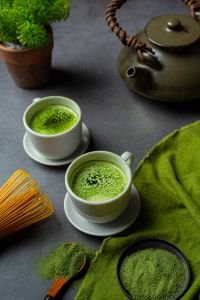
Matcha tea is one of the most sought-after health drinks among the fitness enthusiasts. It is a type of green tea with great antioxidant properties.
written by Drsanjana p [vb]

History of Matcha tea
This variety of green tea had been in use in China and Japan for hundreds of years. The leaves are made into a powder and the matcha tea is much stronger than regular tea.
What is the significance of Matcha Tea in your wellness routine?
Japanese matcha is a type of powdered green tea, grown in a traditional way. Shading of the plants during the growth period enhances the processes of synthesis and accumulation of its biologically active compounds or antioxidants.
Matcha tea is enriched with theanine, caffeine, chlorophyll and various types of catechins.
This green tea contains four main catechins
• epicatechin (EC)
• epicatechin-3-gallate (ECG)
• epigallocatechin (EGC)
• epigallocatechin-3-gallate (EGCG)
Caffeine is an essential component of tea beverages and is responsible for their distinctive and desirable taste. It is a powerful antioxidant too. Its level may be associated with the time of harvest and age of leaves—the older the leaves, the lower the caffeine content. Caffeine content also depends on tea variety, weather conditions during vegetation, as well as the brewing method.
Antidiabetic potential of quercetin& its efficacy in diabetic human subjects is yet to be explored.
Infusions of matcha tea contain from 32.12 to 44.8 mg/L of vitamin C, depending on the temperature of water used to prepare the infusion and the type of tea. Remember that vitamin C is heat sensitive. Hence excessive heating may lose its vitamin C content.
The relatively high theanine content in matcha tea is responsible for its unique non- bitter taste, and the combination of l-theanine and caffeine may enhance concentration, vigilance and efficiency to a great extent .These compounds also help in alleviating stress.
Health benefits of matcha tea
- matcha tea helps to prevent heart attack & stroke
- helps to regulate glucose in blood and help to prevent diabetes.
- Matcha tea boost brain functions
- boosting mental health and clarity
- prevents oxidative stress to cells caused by free radicals due to antioxidant properties of matcha tea.
- Prevents neuro degenerative diseases
- Prevents cardiovascular diseases- heart attack and stroke.
- Prevents colorectal and gall bladder cancers
How does matcha tea help to prevent heart attack & stroke?
Matcha tea is a great source of antioxidant catechins. Among all catechins epigallocatechin-3-gallate (EGCG), is the most active and abundant antioxidants.
It helps to prevent cardiovascular diseases such as heart attacks, stroke due to the potential to reduce LDL bad cholesterol.
The antioxidant catechins EGCG may have a protective effect on the heart muscle as it reduces oxidative stress and inflammatory states
Can Matcha tea boost brain functions?
Matcha tea can improve cognitive function, memory, thinking capacity etc.[2]
Regular consumption of matcha tea has a positive effect on both physical and mental health.
It contains natural antioxidants such as polyphenols. High polyphenolic content has a greater potential for scavenging free radicals than vitamin C as an antioxidant has.
How does matcha tea help to regulate blood glucose levels?
The catechins and other polyphenols of matcha tea have some action on carbohydrate metabolism and help in reducing blood glucose levels.
Its EGCG content may inhibit starch digestion also, thus slow down the sudden release of glucose in the gastrointestinal tract [ 3].
EGCG may present capacity for inhibiting gluconeogenesis in liver and the absorption of lipids and glucose from the gastrointestinal tract, as well as improving insulin sensitivity.
In a nutshell, it can be concluded that matcha tea helps to reduce blood glucose levels in diabetes patients and maintains the glucose level within limits of normalcy in people with normal or borderline blood sugar levels.
What role matcha tea has in boosting mental health?
Catechins help to increase clarity of mind and cognitive function. These health benefits are attributed mainly to epigallocatechin gallate (EGCG ] antioxidants in matcha tea[4].
Oxidative stress initiated by free radicals reaching the body can cause neuronal damage& may lead to memory impairment gradually.
Caffeine in matcha tea, with its anti-inflammatory effects, chiefly in the hippocampus, may prevent the development of this disorder.
The positive effects of caffeine on the nervous system and preventing neurodegenerative diseases are closely related to the decreased deposition of amyloid-β in the brain [5]
Does matcha tea hep in preventing cancers?
- Reduces occurrence of gall bladder and bile duct cancers
Research findings point out that EGCG can cause inhibition of growth and proliferation of gallbladder and bile duct cancer cells[6,7].
- Reduces the risk of colorectal cancer
Consuming large amounts of EGCG may contribute to reducing the incidence of colorectal cancer, partly due to inhibiting tumour growth factors.
EGCG is capable of inhibiting growth and inducing apoptosis of cancer cells.[8]
How does matcha tea protect your nervous system and heart from oxidative damage by free radicals?
Rutin is a polyphenol antioxidant in matcha tea.
Rutin prevents the oxidative stress and inflammations consequent to it.
Chronic inflammation is one of the root causes of many diseases. Similarly free radicals are the major cause many degenerative diseases of organs of your body.
Rutin helps in preventing conditions of free-radical or inflammatory origin, including neurodegenerative conditions due to its antioxidant potential[10].
Quercetin is a phytochemical with antioxidant and neuroprotective activity. It prevents damages to your nervous system [9].
How to prepare Matcha tea?
Making matcha in a cup
STEP 1: Heat filtered water
STEP 2: Add a few drops of hot water to matcha powder and mix into paste with a spoon
STEP 3: Add more hot water to paste mixture and stir. Try 1 teaspoon to 6 ounces of water. Adjust measurement to suit taste.
STEP 4: Matcha is ready to drink
written by dr sanjana p
References for further reading
. https://pubmed.ncbi.nlm.nih.gov/21633901/
https://pubmed.ncbi.nlm.nih.gov/31378691
. https://pubmed.ncbi.nlm.nih.gov/31462168/
. https://pubmed.ncbi.nlm.nih.gov/17679672/
. https://pubmed.ncbi.nlm.nih.gov/24038588/
. https://pubmed.ncbi.nlm.nih.gov/26530716/
. https://pubmed.ncbi.nlm.nih.gov/18990744/